Creating Key Locations
Key locations are specific points of interest in your transit system that help track and analyze usage for cyclist and mobility. These locations serve as reference points for journey analysis, providing insights into movement patterns between important destinations.
Steps to Create a Key Location
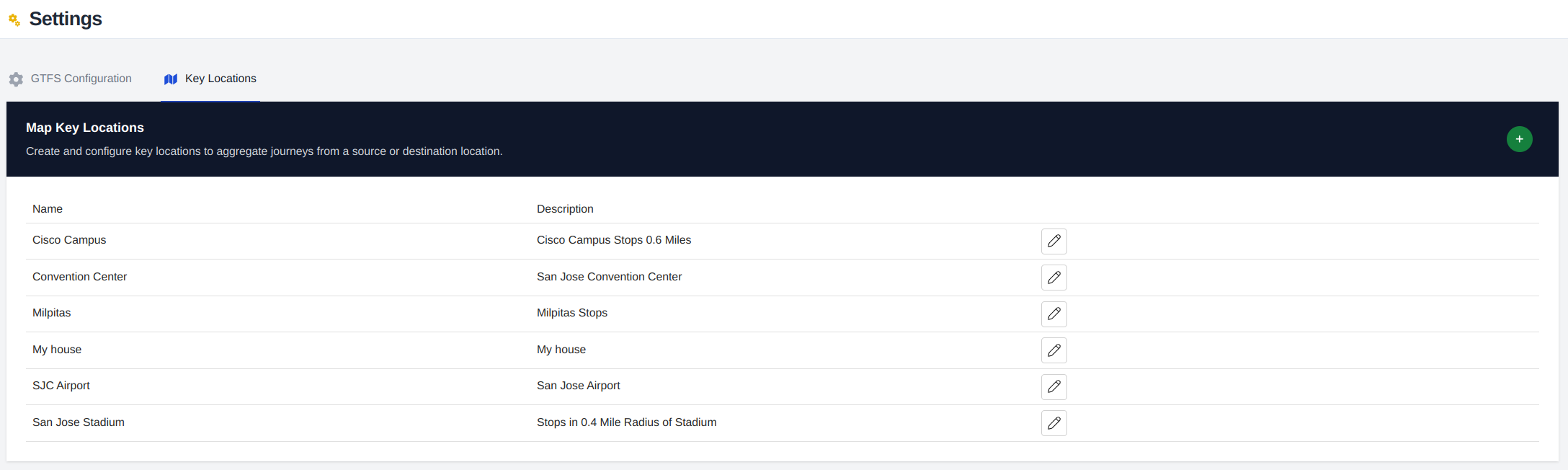
1. Access Settings
Navigate to the Settings section by clicking "Settings" in the top navigation bar.
2. Open Key Locations Tab
Select the "Key Locations" tab to view existing locations and manage new ones.
3. Create New Location
Click the "+" button to begin creating a new key location.
4. Fill Out Location Details
Complete the form with the following information:
- Name: A descriptive name for the location (e.g., "Downtown Transit Center")
- Description: Additional details about the location's purpose or significance
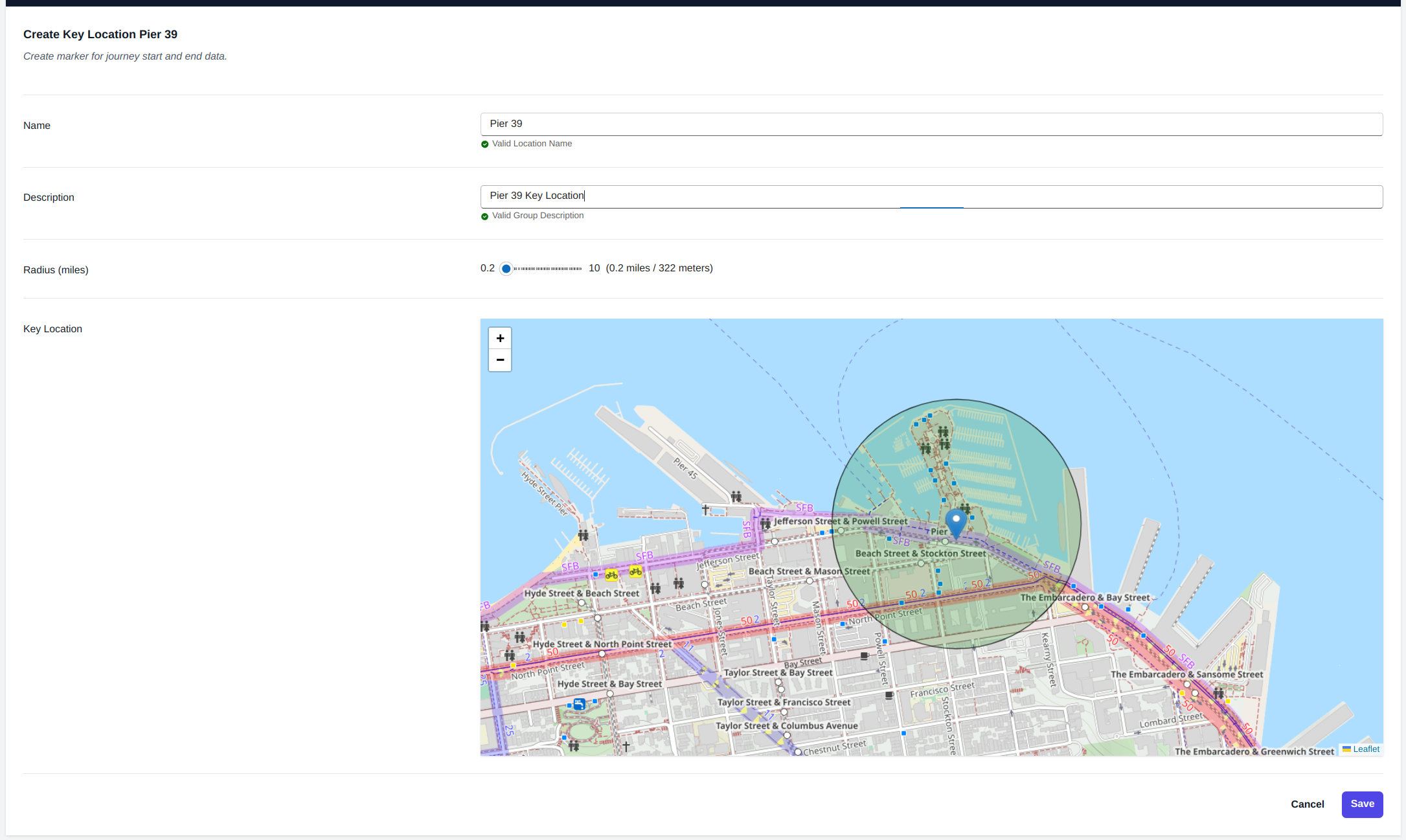
5. Set Geographic Parameters
- Click on the map to select the location point
- Adjust the radius to define the detection zone
- The radius determines when a vehicle is considered "at" this location
- Consider factors like facility size and stop zones when setting the radius
Using Key Locations
Journey Analysis
Key locations enable detailed journey analysis:
- Track cyclist and mobility movements between defined locations
- Analyze patterns of cyclist and mobility usage
- Identify popular routes and destinations to and from key locations
Data Applications
The journey data can be used to:
- Optimize route planning
- Analyze facility usage
- Track service patterns
- Identify high-demand locations
- Monitor accessibility needs
Best Practices
Location Selection
- Choose strategically important locations
- Include major transit centers
- Add popular destinations
- Mark key transfer points
Radius Configuration
- Set appropriate detection zones
- Consider facility size
- Account for stop locations
- Avoid overlapping zones
Naming Conventions
- Use clear, consistent names
- Include geographic context
- Make names easily recognizable
- Use standard terminology
Key locations are fundamental to understanding how your transit system is used and help provide valuable insights into cyclist and mobility movement patterns and service utilization.